Porsche 911, which version should you choose between Carrera, GTS, GT3 and Turbo S?
From the 394 hp Carrera to the 711 hp Turbo S, as a Coupé, Cabriolet or Targa, the Porsche 911 comes in many versions. Here is what sets them apart, using Porsche's figures, so you know which one suits you before subscribing.
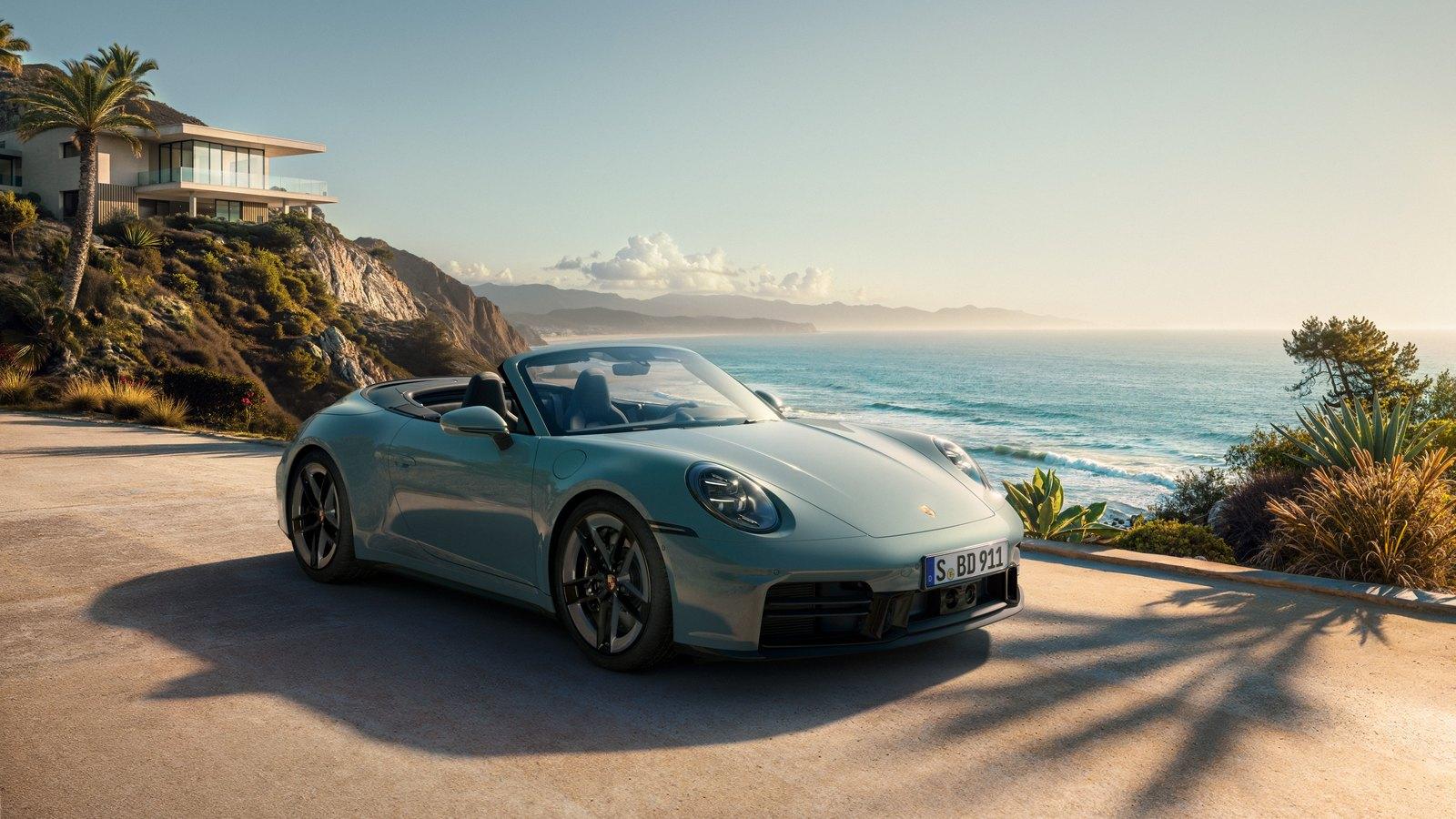
The current Porsche 911, whose latest update was unveiled in May 2024, ranges from the 394 hp Carrera to the 711 hp Turbo S. In between are versions tuned for the road, others for the track, three body styles and two types of drive.
To choose yours, three questions matter, the engine, the number of driven wheels and the body style. Here is how to settle them, followed by what the subscription includes.
- for the 911 Carrera
- 394hp
- for the 911 Turbo S, the most powerful
- 711hp
- to receive a new 911 in Luxembourg or Belgium
- 2 to 3weeks
Power according to Porsche, delivery time taken from our car pages.
What are the main 911 families?
Every 911 keeps a flat-six engine mounted at the rear. They differ in power, gearbox and the kind of driving Porsche tuned them for.
- Carrera: 394 hp, 0 to 100 km/h in 4.1 s (3.9 s with the Sport Chrono Package) and 294 km/h, with an eight-speed automatic gearbox
- Carrera T: the Carrera's engine with a six-speed manual gearbox, rear-axle steering and more than 40 kg less weight
- Carrera S: 480 hp, 0 to 100 km/h in 3.3 s and 308 km/h, with the brakes from the GTS
- Carrera GTS: 541 hp thanks to a hybrid system, 0 to 100 km/h in 3 s and 312 km/h
- GT3: a 4-litre naturally aspirated engine with 510 hp that revs to 9,000 rpm, 0 to 100 km/h in 3.4 s, built for the track
- Turbo S: 711 hp, 0 to 100 km/h in 2.5 s and 322 km/h, the most powerful production 911
The S and the GTS also come with all-wheel drive, as the Carrera 4S and Carrera 4 GTS, as well as in Targa form. The GTS even has its own limited edition, the 911 Spirit 70, a Cabriolet built in 1,500 units, with Olive Neo paint and Pasha-pattern fabrics that recall the 1970s.
Carrera, S or GTS, which one for every day?
These three versions share the eight-speed automatic gearbox and rear-wheel drive, and all come as a Coupé or a Cabriolet. They differ mainly in how much power they keep in reserve.
The Carrera is more than enough on country roads and motorways. The Carrera S adds 86 hp and bigger brakes, for noticeably stronger acceleration. The GTS adds another 61 hp and an electric turbocharger, which builds boost pressure almost instantly, and it gets rear-axle steering as standard.
The Carrera T is for drivers who want to change gear themselves. It keeps the Carrera's engine, but only comes with a manual gearbox and weighs more than 40 kg less.
What does the “4” in 4S or 4 GTS change?
The number 4 stands for all-wheel drive. Power stays the same, and the Carrera 4S covers 0 to 100 km/h in 3.3 s, just like the Carrera S. The system is still tuned to push mainly from the rear, and only sends more torque to the front when grip drops.
In Luxembourg and Belgium, in the rain or on snow, it is a welcome safety margin for a 911 used all year round. The 911 Targa, for its part, only comes with all-wheel drive.
Coupé, Cabriolet or Targa?
The three body styles share the same silhouette and the same engines. What sets them apart is the roof.
- Coupé: a fixed roof and the lightest body, with two seats in the front and two rear seats offered at no extra cost
- Cabriolet: a fabric roof that opens in about twelve seconds, at up to 50 km/h
- Targa: a roof panel that stows away automatically in 19 seconds, a large glass rear window and the wide roll bar of the first Targa models
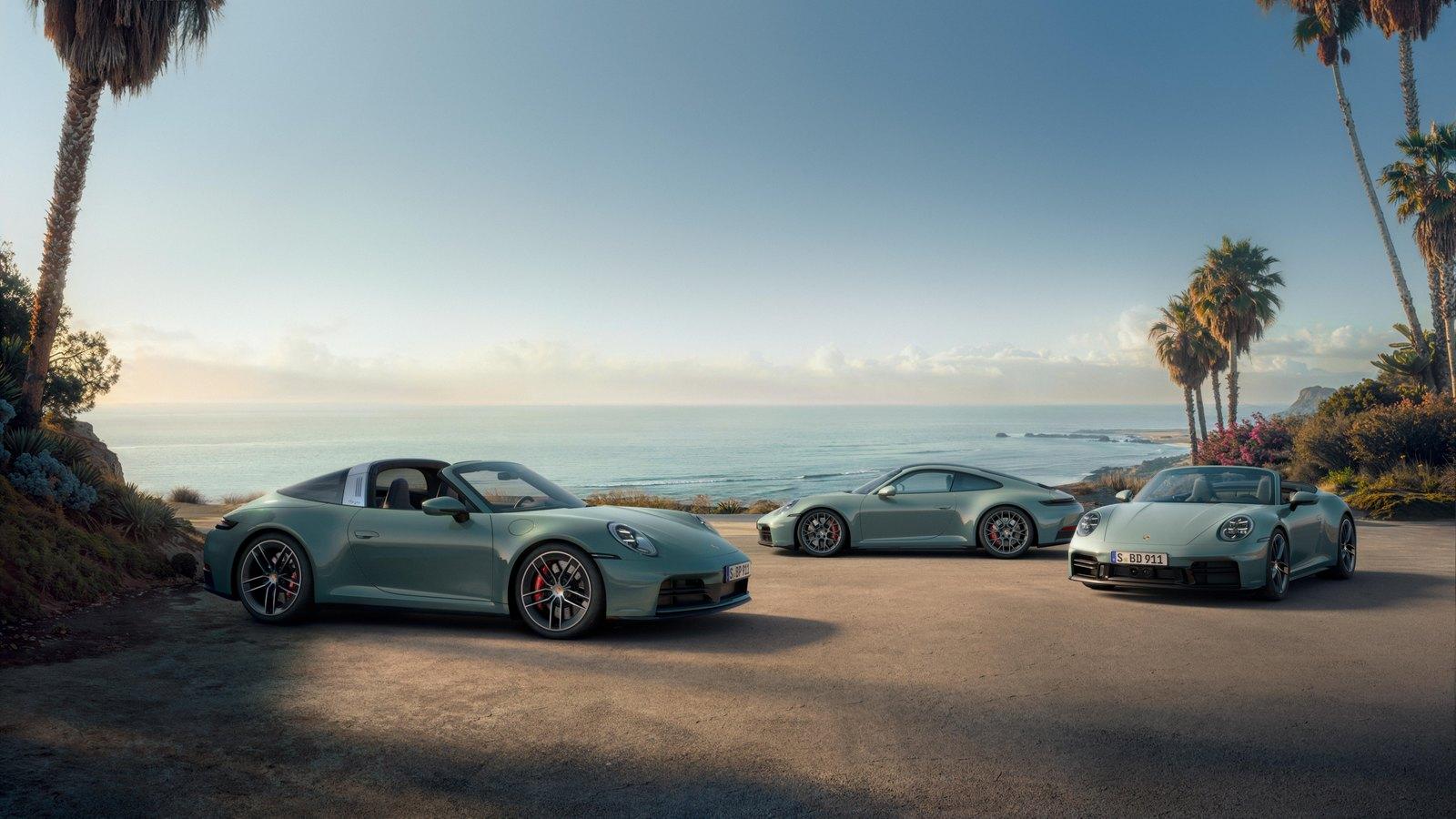
The Cabriolet and the Targa always have two rear seats. The Cabriolet opens up the most, while the Targa keeps the look of a coupé once closed.
GT3 and Turbo S, who are they for?
They sit at the two ends of the range and meet different needs.
The GT3 comes from motorsport. Its naturally aspirated engine revs up to 9,000 rpm, it comes with a seven-speed dual-clutch gearbox or a six-speed manual, and its large fixed rear wing presses it onto the track. The GT3 Touring keeps the same mechanics without the fixed wing, replaced by a spoiler that extends while driving, for a more discreet look.
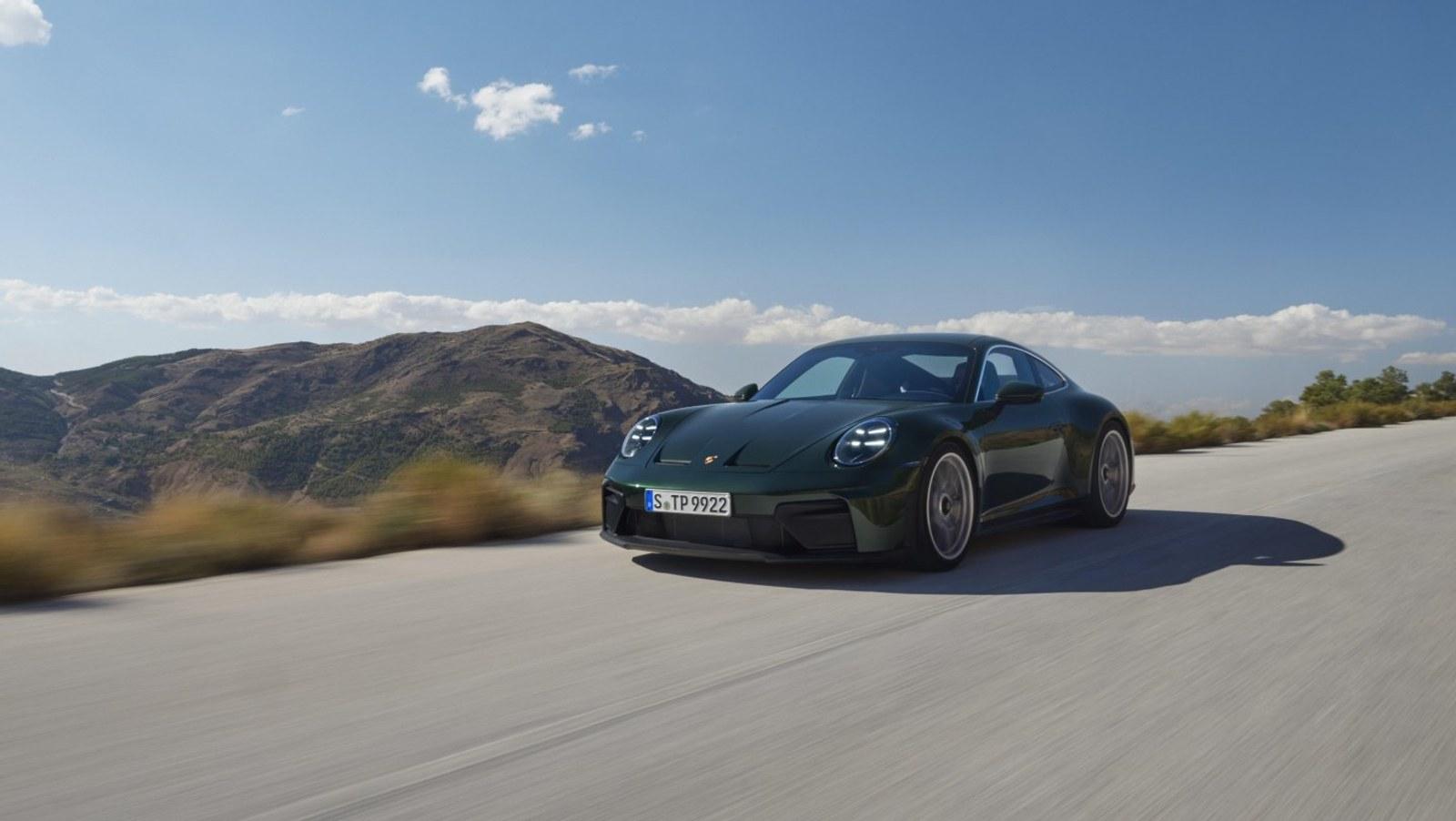
The GT3 is designed for track days and weekend roads more than for the daily commute. At Turismo, it comes with a package of 417 or 1,000 km per month.
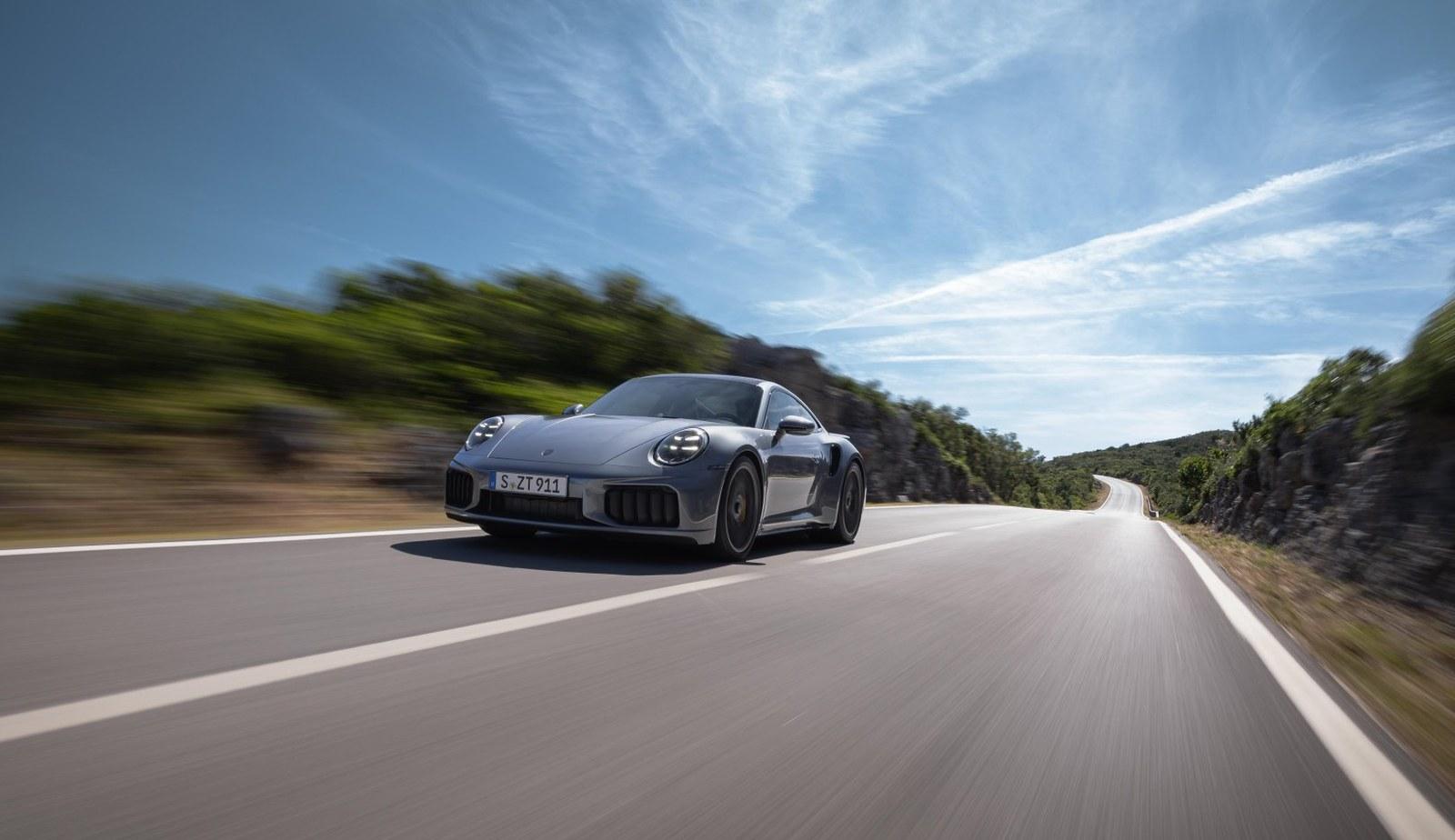
The Turbo S is the other extreme. With 711 hp, all-wheel drive and a hybrid system with two electric turbochargers, it accelerates harder and goes faster than the GT3. Porsche presents it as the all-rounder of its sports cars.
Can the hybrid 911 be plugged in?
No. The GTS and the Turbo S are hybrids, but not plug-in hybrids. Their small 1.9 kWh battery charges while driving, notably thanks to the electric turbocharger, which recovers energy from the exhaust gases. Their electric motor boosts the petrol engine, it does not let you drive on electricity alone like a plug-in hybrid.
For tax purposes, they therefore do not get the benefits of plug-in hybrids, including as a company car. The rules in each country are explained in our company car guide.
How do you configure your 911?
Our 911s are new and already in stock in Luxembourg and Belgium. On the car's page, you build yours step by step, from cars that really exist, delivered within two to three weeks.
- The version: from the Carrera to the Turbo S
- The body style: Coupé, Cabriolet or Targa
- The colour, including several Paint to Sample colours such as British Racing Green
- The wheels, 20-inch at the front and 21-inch at the rear
- The interior and seats, from sports seats to lightweight bucket seats
At each step, the page shows the matching cars and turns the 911 through 360 degrees in its real colour, with its real wheels. Then comes the list of its equipment, already included in the monthly payment.
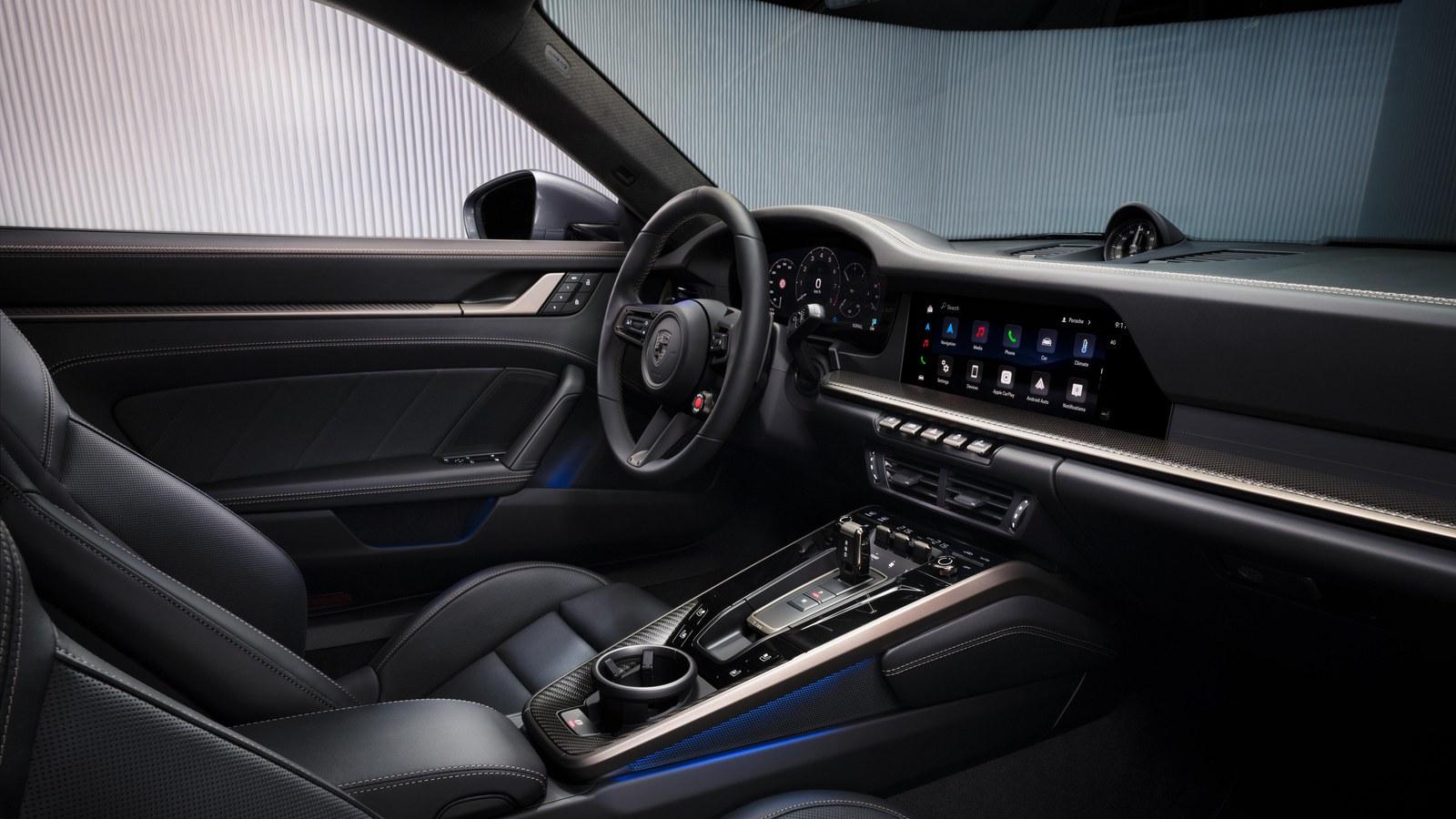
All that remains is to set the duration and the number of kilometres per month to see the exact price. The 911 is then reserved for you, prepared, and handed over to you at home or at a dealership.
What does the subscription include?
You can take the 911 for 24 to 60 months in Luxembourg and 36 to 60 months in Belgium, with 1,000 or 2,000 km per month, or 417 or 1,000 km per month for the GT3 and the GT3 Touring. The monthly payment includes insurance, servicing, tyres, taxes and roadside assistance.

How much per month?
Porsche 911
Term
Kilometres per month
2 905 €per month
60 months, 1 000 km per month, with a 7 020 € down payment. VAT included
- Insurance
- Maintenance
- Home delivery
On top of the monthly payment, you still pay for fuel, delivery and, if you go over your package, the extra kilometres.
For a shorter period, some 911s from our stock are available from six months, including in France. The minimum duration is shown on each car's page.
With a subscription, the car's resale value is not your concern. Our guide comparing leasing and buying runs the numbers item by item.
FAQ: the Porsche 911 on subscription
What is the difference between the Carrera and the Carrera S?
The Carrera S has 480 hp instead of 394, bigger brakes, and goes from 0 to 100 km/h in 3.3 s instead of 4.1 s.
Should you choose a 911 S or 4S?
The 4S has all-wheel drive, useful in the rain and in winter, for the same performance. The S, with rear-wheel drive, is slightly lighter.
Is the hybrid 911 a plug-in?
No, the GTS and the Turbo S charge their battery while driving and have no charging socket.
How many seats does a 911 have?
The Cabriolet and the Targa always have two small rear seats. On the Coupé, they are offered at no extra cost. The GT3 is a two-seater, except for some GT3 Touring cars fitted with optional rear seats. The number of seats in each car is shown on its page.
Can you choose the colour?
Yes, the colour is chosen on the car's page, along with the version, body style, wheels and interior, from our 911s in stock.
Can you take a 911 in France or for less than two years?
Yes, some 911s from our stock are available from six months, including in France. New 911s to configure are offered in Luxembourg, for 24 to 60 months, and in Belgium, for 36 to 60 months.
In short
- The 911 ranges from the 394 hp Carrera to the 711 hp Turbo S, by way of the Carrera S, the hybrid GTS and the track-focused GT3.
- The 4 signals all-wheel drive, and the Targa only comes with it.
- At Turismo, you build it on its page in Luxembourg, from 24 months, or in Belgium, from 36 months, and receive it new within two to three weeks.
To see the 911s available and their monthly payment in your country, head to the Porsche 911 page.
Sources(7)
- Porsche Newsroom, la nouvelle 911 Carrera et la 911 Carrera GTS (28/05/2024)
- Porsche Newsroom, la 911 Carrera S (08/01/2025)
- Porsche Newsroom, la 911 Carrera T (29/10/2024)
- Porsche Newsroom, les 911 à quatre roues motrices (02/07/2025)
- Porsche Newsroom, la 911 GT3 et la 911 GT3 Touring (2024)
- Porsche Newsroom, la 911 Turbo S (07/09/2025)
- Porsche Newsroom, la 911 Spirit 70 (2025)